



Charting the Co-Occurring Terrain in Virginia
Defining dual diagnosis and why it shapes every recovery journey
Dual diagnosis refers to the simultaneous presence of substance use disorders and mental health conditions in one individual. Clinicians across Virginia see that untreated depression, PTSD, or anxiety can intensify drug addiction and complicate withdrawal symptoms. Because both conditions feed off each other, integrated behavioral health care remains crucial for sustainable recovery. When treatment plans ignore mental health, relapse rates climb, delaying the healing process for families and communities. Therefore, understanding this intertwined reality empowers people to seek addiction treatment services that truly target the whole person.
Equally important, dual diagnosis treatment Virginia residents rely on blends therapy, medication-assisted treatment, and peer support. Cognitive Behavioral Therapy (CBT) and Dialectical Behavior Therapy (DBT) help clients reframe distorted thinking patterns driving substance misuse. Meanwhile, medications such as buprenorphine or naltrexone offer physiological stability during the early stages of change. This evidence-based combination enhances emotional regulation and prepares clients for long-term relapse prevention planning Virginia programs emphasize. Ultimately, integrated strategies improve quality of life, rebuild relationships, and strengthen communities statewide.
Mapping disparities to ensure addiction treatment services near you
Virginia’s geography creates unique access gaps, from isolated Appalachian hollows to dense Northern Virginia suburbs. Transportation barriers, insurance hurdles, and provider shortages can prevent timely entry into co-occurring disorders rehab VA facilities. However, state health dashboards now pinpoint regions where overdose deaths intersect with untreated depression or anxiety. Armed with this data, policymakers and advocates push for expanded outpatient care and mobile medication-assisted treatment clinics that VA residents can reach without delay. Consequently, families can locate addiction treatment services near me that align with cultural, linguistic, and financial needs.
Furthermore, community action boards collaborate with universities to conduct early intervention for teen substance misuse Virginia struggles to address. School counselors partner with recovery support services to screen athletes, artists, and honor students alike for signs of withdrawal or emotional distress. Outreach teams then guide parents toward intensive outpatient programs at Northern Virginia sites or telehealth platforms when distance poses challenges. By spotlighting disparities and mobilizing resources, communities turn mapping into momentum for equitable healing.
The Addiction Treatment Services directory is your statewide compass
Digital tools now streamline the once overwhelming search for credible treatment facilities. The dual diagnosis treatment options in Virginia page within the Addiction Treatment Services directory curates licensed detox centers, residential rehabs, and outpatient networks across every county. Interactive filters sort programs by insurance accepted, veteran focus, LGBTQ-friendly status, and availability of trauma-informed addiction care. As a result, users can compare treatment programs quickly and initiate admissions with confidence.
Moreover, the directory connects readers to AA Meetings, NA Meetings, and sober living houses that Northern Neck residents recommend for ongoing support. Built-in geolocation identifies addiction treatment services near you, presenting accurate driving times and public transit options. For those living near state borders, the platform lists integrated behavioral health care Norfolk providers alongside co-occurring disorders rehab in Maryland corridor facilities. This cross-state perspective helps families craft seamless recovery pathways without bureaucratic delays. Over time, the directory evolves through verified client reviews, ensuring trustworthy guidance for every new visitor.
Reading the Layers of Care Across the Commonwealth
Prevalence hotspots and the urgency of early intervention for teen substance misuse
School nurses, athletic trainers, and parent-teacher associations across Virginia report clusters of vaping, alcohol, and pill misuse arising faster than ever. These prevalence hotspots often appear near distressed economic zones where community programs vanished after budget shifts. Addiction Treatment Services analysts overlay overdose data with suspension reports to identify secondary schools requiring immediate outreach. When counselors deploy screening tools, they uncover co-occurring anxiety or depression driving the substance use behavior. Early mapping therefore converts raw numbers into actionable insight that saves adolescents from lifelong substance use disorders.
Because teen brains remain in rapid development, even brief experimentation can hard-wire maladaptive reward pathways. Comprehensive early intervention for teen substance misuse Virginia champions must include trauma-informed motivational interviewing, family coaching, and culturally relevant peer mentoring. Public health teams increasingly rely on the hands-on dual diagnosis help in Virginia recovery guide to coordinate services between schools, outpatient care providers, and telehealth psychiatrists. This living guide lists funding sources and outlines how to integrate harm-reduction education without stigmatizing students. As a result, communities replace reactive punishment with proactive mental health and addiction services Richmond parents can trust.
Detoxification services in the Tidewater region anchoring safe withdrawal
The Tidewater region bound by military installations and maritime industries shows high rates of opioid and alcohol dependence among civilians and veterans alike. Sudden cessation without supervision triggers dangerous withdrawal symptoms such as seizures, hallucinations, and cardiac instability. Tidewater detoxification services therefore focus on 24-hour nursing, real-time cardiac monitoring, and medication-assisted treatment clinics that VA regulators certify. Clinicians employ buprenorphine micro-dosing protocols to soften the acute phase, then introduce rapid referral to evidence-based substance abuse therapy that Virginia counselors deliver. By anchoring stabilization close to home, families avoid long travel times that often discourage follow-up engagement.
Many detox facilities partner with maritime unions and military family readiness offices to guarantee seamless admissions regardless of insurance complexity. Case managers leverage the Addiction Treatment Services directory to match clients with outpatient care for continued medication management. They also distribute printed relapse prevention planning Virginia recovery worksheets before discharge to encourage accountability. Community navigators arrange transportation vouchers, reducing the recurring barrier of bridge tolls and limited bus routes. Taken together, these detoxification services and Tidewater region programs create a stable first step toward comprehensive recovery.
Residential rehab for co-occurring disorders along the Charlottesville corridor
The Charlottesville corridor benefits from a thriving academic ecosystem, which fuels cutting-edge research into neurobiology and trauma integration. Residential rehab for co-occurring disorders Charlottesville clinicians oversee blends of art therapy, EMDR, and weekly neurological assessments. Because clients live onsite for several weeks, therapists can observe sleep cycles, dietary patterns, and medication adherence with precision. This continuous observation informs individualized treatment programs that address both substance misuse and mood dysregulation. By attacking root causes, residents build resilience rather than simply suppressing cravings.
Local vineyards and craft breweries once complicated sobriety upkeep post-discharge. In response, residential centers created sober tourism outings that highlight Blue Ridge hiking instead of tasting rooms. Alumni volunteer as peer recovery support services VA ambassadors, guiding new participants through community reintegration. Family involvement in dual diagnosis treatment sessions occurs every weekend, either in person or through encrypted video. The result is an ecosystem where evidence-based practice merges with experiential learning, setting a standard that other regions aim to emulate.
Intensive outpatient program networks in Northern Virginia and telehealth reach
Northern Virginia with its rapid transit lines and international workforce requires flexible programming that fits demanding schedules. Intensive outpatient program Northern Virginia providers answer by offering evening groups, weekend CBT workshops, and asynchronous relapse monitoring apps. These networks partner with government contractors to maintain security clearances while addressing mental health needs. Digital platforms extend services to commuters stuck on congested highways, allowing therapy sessions to commence from parked cars or quiet office pods. Such adaptability keeps clients engaged through unavoidable life disruptions.
Telehealth addiction counseling in rural Virginia participants rely on dovetails with these metropolitan services, ensuring quality care flows outward along fiber-optic lines. Licensed clinicians in Arlington supervise associates in coalfield counties, standardizing documentation and outcome measurement. Cross-region virtual case conferences allow providers to troubleshoot complex dual diagnosis scenarios in real time. Insurance parity laws and grant funding further widen access, proving that geography no longer dictates recovery potential. By synchronizing brick-and-mortar sessions with secure video, the Commonwealth advances truly integrated behavioral health care that Norfolk advocates envisioned years ago.
Veteran-focused and LGBTQ-friendly programs are gaining ground in urban and rural hubs
Virginia hosts one of the nation’s largest veteran populations, many grappling with PTSD linked to overseas deployments. Veteran-focused dual diagnosis programs that VA clinicians lead incorporate moral injury processing, service-animal partnerships, and camaraderie-driven group therapy. Peer navigators, often decorated service members themselves, walk newcomers through VA benefits paperwork and civilian relapse prevention challenges. These specialized tracks coexist within broader treatment facilities, ensuring families can heal together rather than entering separate silos. Success here reflects a deep respect for military culture and its unique recovery barriers.
Simultaneously, LGBTQ-friendly substance use treatment Virginia centers commit to inclusive language, hormone therapy coordination, and support for chosen family structures. Rural hubs collaborate with urban advocacy groups to import sensitivity training and tele-psychiatry resources. Crisis stabilization units for dual diagnosis VA residents cite reports of decreased elopement rates when clients feel authentically affirmed. Intersectional programming also reduces overdose disparities among transgender individuals, who previously avoided care due to fear of discrimination. Collectively, these veteran and LGBTQ initiatives showcase how tailored behavioral health services foster dignity alongside sobriety.
 Integrating Evidence and Community for Whole-Person Healing
 Integrating Evidence and Community for Whole-Person Healing
CBT, DBT and trauma-informed approaches guiding evidence-based substance abuse therapy
Cognitive Behavioral Therapy reshapes thought patterns that keep cravings alive, while Dialectical Behavior Therapy trains clients to tolerate distress without self-harm. Together, these modalities anchor the CBT and DBT for co-occurring disorders Virginia clinicians consider their clinical gold standard. Therapists weave trauma-informed language into every session, acknowledging that many clients survived childhood adversity or combat exposure. By exploring past wounds safely, participants stop blaming themselves for withdrawal symptoms that feel uncontrollable. This foundation establishes trust, which research shows is vital for every sustainable recovery process.
Evidence-based substance abuse therapy in Virginia centers deliver also relies on measured outcomes instead of intuition alone. Weekly validated assessments capture mood changes, craving intensity, and sleep quality, guiding rapid course corrections. When anxiety spikes, therapists might introduce mindfulness drills or EMDR to extinguish flashbacks fueling relapse risk. Patients appreciate seeing hard data that confirms progress, especially when co-occurring disorders complicate self-perception. Transparent metrics motivate attendance and strengthen clinician credibility across residential treatment and intensive outpatient program Northern Virginia tracks.
Medication-assisted treatment clinics VA bridging withdrawal symptoms to stability
Medication-assisted treatment clinics that VA regulators certify employ buprenorphine, methadone, or naltrexone to calm the physical storm of early sobriety. Pharmacists collaborate with psychiatrists to personalize dosages, ensuring opioid receptors stay quiet while mood stabilizers settle erratic emotions. Because each molecule interacts differently with brain chemistry, clinicians monitor liver panels, heart rhythms, and subjective comfort every week. This hands-on oversight prevents diversion while affirming that science, not willpower alone, lifts clients toward wellness. As stabilization deepens, counselors introduce values clarification exercises that rebuild purpose beyond pills.
Rural counties once lacked prescribing providers, but telehealth addiction counseling rural Virginia partnerships now beam board-certified physicians into underserved clinics. Patients log on from community centers or church offices, reducing travel costs and stigma. Mobile units then deliver take-home doses under secure protocols, proof that modern logistics can outrun old access barriers. When medications hold cravings at bay, clients engage fully in psychoeducation covering nutrition, sleep hygiene, and relapse prevention planning Virginia recovery coaches facilitate. The pharmacological bridge, therefore, supports both brain and lifestyle remodeling.
Family involvement in peer recovery and sober living houses in the Northern Neck
Healing flourishes when relatives understand how substance use disorder hijacks priorities, memories, and decision-making circuits. Family involvement in dual diagnosis treatment begins with structured psychoeducation, demystifying neuroscience in plain language. Loved ones practice reflective listening instead of confrontation, reducing shame spirals that sabotage early gains. They also learn to set healthy boundaries, protecting finances and emotional energy while still offering encouragement. This balanced approach turns households from battlegrounds into recovery incubators.
Peer recovery support services that VA alumni provide add another essential layer of accountability. Mentors accompany newcomers to medical appointments, court hearings, and AA Meetings, modeling practical coping tools. Many graduates transition into sober living houses in Northern Neck Virginia communities established near marinas and farmland. These residences enforce curfews, drug testing, and communal chores, offering real-world structure before total independence. With family coaching and peer guidance aligned, relapse odds drop dramatically across both coastal hamlets and inner-city neighborhoods.
Relapse prevention planning with digital monitoring apps for Virginians in recovery
Smartphone applications now transform every pocket into a portable coping toolbox. Geofencing alerts remind users when they approach bars or former purchasing spots, prompting pre-planned exit strategies. Mood trackers display color-coded trends that signal brewing depression, urging earlier therapist contact. Wearable devices even log heart-rate spikes that often precede craving waves, empowering data-driven self-awareness. The most effective platforms integrate seamlessly with counselor dashboards, ensuring no warning sign goes unnoticed for long.
The Addiction Treatment Services team curates evidence-backed software, including the digital relapse prevention planning for Virginians toolkit popular among Tidewater veterans. Clients customize emergency contact lists, gratitude journals, and evening reflection prompts inside one secure portal. Push notifications celebrate streak milestones, turning victory into ongoing positive reinforcement. Combined with weekly telehealth check-ins, digital safeguards extend clinical vigilance far beyond office walls. Technology therefore stitches continuous care into the fabric of daily life.
Faith-based and holistic addiction recovery options through the Blue Ridge and Shenandoah Valley
For many residents, spirituality remains the compass steering life decisions and crisis coping. Faith-based recovery services Shenandoah Valley congregations offer blend prayer circles, scriptural study, and licensed counseling. Ministers partner with clinical social workers to translate religious teachings into relapse prevention language, avoiding dogma while uplifting hope. Clients who once felt judged by secular systems often embrace this culturally congruent sanctuary. Community meals and volunteer projects further cement belonging, a critical antidote to isolation-driven substance misuse.
Meanwhile, holistic addiction recovery Blue Ridge retreats celebrate nature as a healing ally. Daily sunrise hikes release endorphins, while yoga classes regulate the autonomic nervous system dysregulated by long-term stimulant use. Nutritional workshops teach anti-inflammatory meal prep, replacing sugar crashes with sustained energy. Acupuncturists, massage therapists, and art instructors collaborate under one roof, offering multisensory pathways back to equilibrium. When spiritual and holistic tracks synchronize with clinical oversight, whole-person healing shifts from slogan to lived reality.
From Mapping to Momentum Building Virginia’s Seamless Recovery Future
Aligning crisis stabilization units and integrated behavioral health care for lasting impact
Crisis stabilization units across Virginia now operate as rapid response sanctuaries for people experiencing simultaneous psychiatric and substance emergencies. Staffed by trauma-informed nurses, these units deliver medication-assisted treatment within minutes, preventing relentless withdrawal symptoms from escalating. Social workers immediately coordinate with integrated behavioral health care Norfolk partners to secure next-step placement. Real-time electronic records share lab results, cutting duplication and delay. Families receive daily progress calls that replace fear with actionable hope. Peer recovery support services VA alumni sit bedside, translating clinical jargon into lived wisdom. This layered approach turns moments of crisis into opportunities for lasting change.
State planners now study performance dashboards to pinpoint bottlenecks and direct funding where outcomes still lag. Their findings feed into collaborative workshops that explore ways to strengthen dual diagnosis strategies today. Participants include sheriffs, hospital administrators, and rural clergy, ensuring every voice guides protocol upgrades. Together they craft shared discharge templates, eliminating the handoff gaps that once triggered relapse. Continuous quality improvement sessions keep benchmarks transparent and ambitious. Over time, blended leadership transforms isolated programs into a unified safety net for every Virginian.
Exploring addiction treatment services near me to rewrite the story of co-occurring recovery
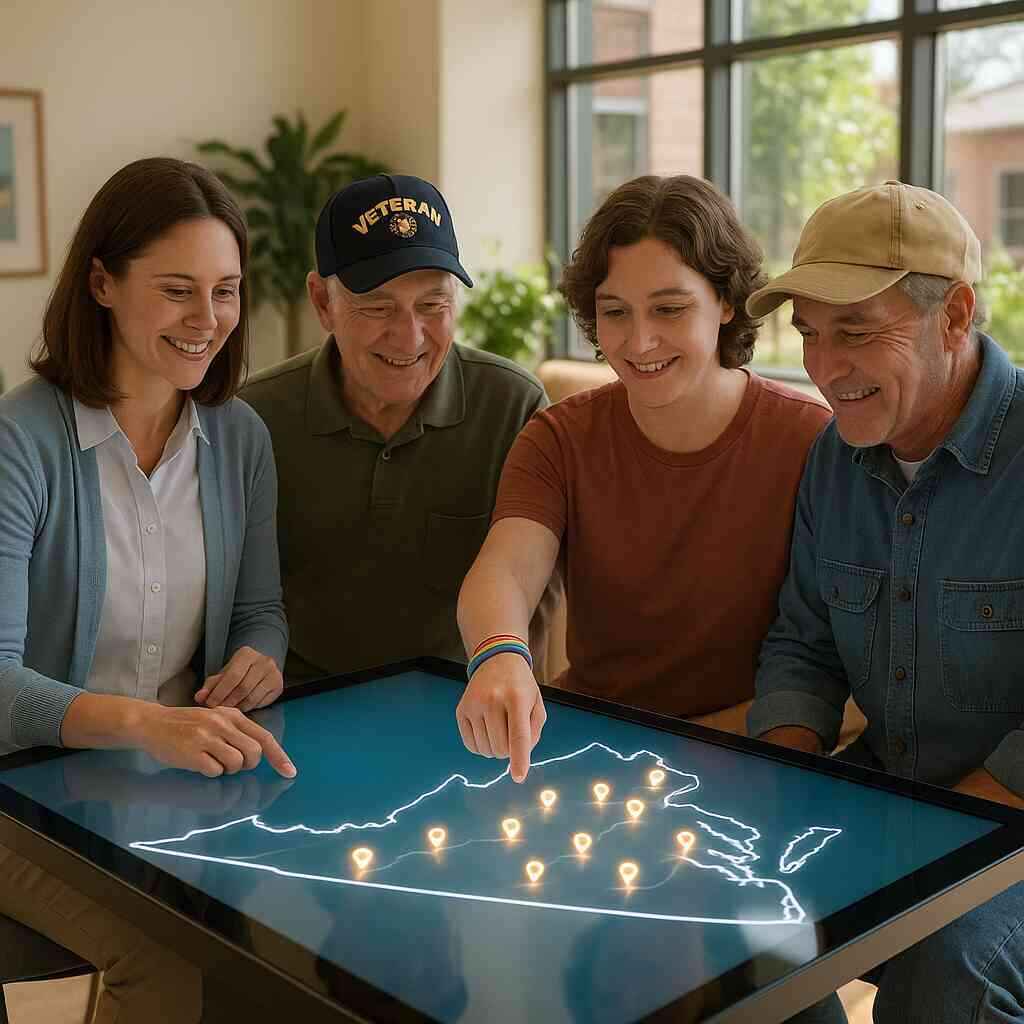
Searching for addiction treatment services near me no longer feels like wandering in fog. The directory’s Virginia map displays detox beds, intensive outpatient slots, and residential co-occurring rehab options on one dashboard. Filters for Medicaid, private insurance, and veteran benefits reveal hidden opportunities that match real budgets. Interactive chat agents answer questions about medication interactions, travel logistics, and family engagement. With data and compassion combined, individuals turn hesitant clicks into decisive steps toward recovery.
Community advocates encourage residents to bookmark the platform and share it during health fairs, parent-teacher nights, and church gatherings. Every referral multiplies awareness, shrinking the time between recognition and professional help. Push notifications remind users when new outpatient care groups open, keeping momentum alive. Meanwhile, success stories posted by alumni demonstrate that integrated care can rewrite even the most complex narratives. The cycle of seeking, finding, and thriving becomes the Commonwealth’s new recovery storyline.
Frequently Asked Questions
 Frequently Asked Questions
Question: How can I quickly find integrated behavioral health care Norfolk programs that address both substance use disorders and mental health conditions?
Answer: Start with the Addiction Treatment Services directory Virginia map. Select the dual diagnosis filter, choose Norfolk as your target city, and the platform will display licensed treatment facilities that combine psychiatric care with evidence-based substance abuse therapy that Virginia clinicians recommend. You can further refine by Medicaid-covered addiction treatment centers VA, private insurance accepted rehab Richmond metro, or veteran-focused dual diagnosis programs VA. Each listing includes phone numbers, verified client reviews, and directions, so you can move from online search to intake call within minutes.
Question: What specific tools does the directory give families who need medication-assisted treatment clinics VA and strong relapse prevention planning Virginia recovery strategies?
Answer: Every clinic profile inside our addiction treatment services directory details which FDA-approved medications-buprenorphine, methadone, or naltrexone-are prescribed on-site. You’ll also see whether the program offers digital relapse monitoring apps for Virginians in recovery, peer recovery support services VA, or sober living houses in Northern Neck Virginia for post-detox structure. Families can download printable relapse prevention worksheets, set up automated appointment reminders, and access a 24/7 chat staffed by credentialed counselors who walk you through dosage questions, insurance authorizations, and transportation options.
Question: In the blog Addiction Treatment Services Mapping Dual Diagnosis Virginia, you highlight regional gaps. How does your platform help rural residents locate co-occurring disorders rehab VA or telehealth addiction counseling rural Virginia?
Answer: Our geolocation engine recognizes ZIP codes in Appalachian hollows, Shenandoah farms, or Tidewater fishing villages and then surfaces the closest dual diagnosis treatment Virginia resources-whether that’s a brick-and-mortar facility within 50 miles or a telehealth provider licensed statewide. We tag listings with trauma-informed addiction care in Appalachian Virginia, mobile detoxification services Tidewater region, and broadband-friendly telehealth options, so you know what technology requirements exist before scheduling. For areas without high-speed internet, the directory flags clinics that offer phone-based intensive outpatient programs and mail medication delivery, ensuring no Virginian slips through the cracks.
Question: Does Addiction Treatment Services offer guidance on early intervention for teen substance misuse in Virginia and family involvement in dual diagnosis treatment?
Answer: Yes. Under the Early Intervention tab, you’ll find screening questionnaires school counselors can use, a directory of adolescent-specific intensive outpatient program Northern Virginia sites, and downloadable parent toolkits that explain withdrawal symptoms, DBT and CBT for co-occurring disorders Virginia best practices, and boundary-setting techniques. We also list weekend family psychoeducation groups at mental health and addiction services in Richmond centers, so relatives learn how to support recovery without enabling. The result is a coordinated roadmap from first warning signs to sustainable sobriety.
Question: Which insurance options are supported when searching for residential rehab for co-occurring disorders in Charlottesville or a commuter-friendly intensive outpatient program in Northern Virginia?
Answer: Each treatment facility card displays Accepted Insurance at a glance-Medicaid, Medicare, TRICARE for veterans, or major private plans like Blue Cross and Aetna. Use the Insurance filter to view only Medicaid-covered addiction treatment centers VA or private insurance accepted programs. For self-pay clients, many centers offer sliding-scale fees and financing plans listed right on the profile page. Our addiction treatment services near you approach means financial clarity upfront, so you can focus on choosing the clinical environment-residential, outpatient care, or day treatment-that best supports your recovery process.