
When a sober house stops feeling like support and starts feeling like a risk
If you are comparing sober living options tonight, you may feel torn between hope and alarm. That reaction makes sense. A structured sober living program should feel steady, not vague. It should provide recovery support after residential treatment, medical detox, or an IOP step-down support transition. It should not feel like a room for rent with a recovery slogan on the wall.
What structured sober living should actually provide after residential treatment or IOP step down
Structured sober living should support the space between treatment and full independence. That means clear house rules and expectations, predictable curfews and daily structure, drug and alcohol testing, and a real recovery-focused routine. It should also fit your level of care, especially after inpatient rehab, PHP, or an outpatient program. Good transitional housing helps you keep momentum when your life still feels fragile. It does not pretend you should already be fine.
You should expect peer support in recovery, recovery coaching, and accountability in recovery. You should also expect practical help with relapse prevention, appointment follow-through, and aftercare planning. Here is the part most families miss: structure is not the same as control. A strong sober living house creates stability without humiliating people. That balance matters more than polished marketing language.
The warning signs of a house that has rules on paper but no real accountability in daily life
The warning signs usually show up fast. Staff may talk about standards, but nobody enforces them. Residents may come and go freely. Testing may be irregular. Chores may be optional. Those gaps matter because addiction treatment works best with consistency, not guesswork.
You don't have to figure this out alone.
Speak with a caring specialist now — we'll verify your insurance, answer your questions, and find the right program near you. Free, 100% confidential, and no pressure, 24/7.
Call 1-888-685-2199Verify your insurance →I once heard from a young man stepping down from alcohol rehab who described his house as “quiet chaos.” No one checked curfews. Visitors drifted in late. One resident was clearly struggling, but no one intervened. Within a month, the whole place felt unstable. That is not structure. That is risk wearing a recovery label.
Why transitional housing without recovery support can quietly sabotage relapse prevention
Transitional housing can be helpful, but only if it includes recovery support. Without it, the environment can slowly undo your progress. You may have left residential treatment with strong intentions, but ordinary stress can pile up fast. A loose house can amplify cravings, isolate you, and make relapse warning signs easier to ignore. That is especially true after opioid addiction, heroin addiction, or fentanyl addiction treatment.
A sober living house should connect daily life to recovery habits. That includes sober community contact, morning routines, meeting attendance, and visible expectations. On the projects we’ve reviewed this year, the houses that worked best did not rely on hope alone. They built a rhythm. They made relapse prevention concrete. That is what helps recovery support feel real instead of decorative.
The paper trail that tells you whether a program is built for recovery or just renting beds
The paperwork tells you a lot if you read it carefully. Good programs are specific. Weak programs stay vague. You should be able to see how the house operates, who gets admitted, and what happens when someone struggles. That paper trail matters because structured sober living should match real-world recovery needs, not just fill beds.
How to read house rules and expectations for curfews, chores, visitors, and drug and alcohol testing
Start with the basics. Ask for written house rules and expectations. Look for curfews, chore schedules, visitor policies, medication rules, phone use rules, and consequences for violations. Then ask how drug and alcohol testing works in practice. If the answers sound flexible in a way that removes accountability, be careful.
A solid policy usually explains what happens after a failed test. It should not rely on shame. Instead, it should define steps, check-ins, and possible referrals for higher support. The best programs treat testing as part of relapse prevention, not punishment. That distinction protects dignity and improves safety. It also tells you the house understands substance use disorder recovery.
What a legitimate intake process should ask about substance use disorder history, detox symptoms, and relapse warning signs
A real intake process should ask questions, not just collect payment details. It should explore your substance use disorder history, recent detox symptoms, withdrawal management needs, and any recent medical detox or medical concerns. It should ask about relapse warning signs, triggers, and previous aftercare planning. It should also ask about mental health support in sober living if anxiety, depression, trauma, or sleep problems are part of the picture.
If nobody asks about your history, that is a concern. If nobody asks whether you recently completed inpatient rehab, PHP, or an outpatient program, that is another concern. Good intake should help match you to the right environment. It should also flag risks tied to cocaine addiction, benzodiazepine addiction, prescription drug addiction, or co-occurring disorders. You want screening, not a sales script.
Where ASAM criteria and level of care transitions matter when you are coming from inpatient rehab, PHP, or outpatient program care
ASAM criteria matter because recovery is not one-size-fits-all. A person leaving inpatient rehab may need a different housing structure than someone stepping down from an outpatient program. Someone coming from PHP may still need daily clinical support. Someone with dual diagnosis needs may need more supervision, not less. That is why level of care transitions matter so much.
Think of sober living as part of the continuum, not a separate universe. It should support outpatient program transition, IOP, PHP transition, or added recovery support when needed. It should also complement therapy and case management. If the house cannot explain how it fits your current level of care, keep looking. A program should know where it sits in the recovery ladder. You should not have to guess.
What every family should press on before signing anything
Families often feel pressure to decide quickly. That urgency is understandable. It is also exactly when bad-fit decisions happen. Before you sign, ask direct questions about support, treatment access, and mental health care. A good program will welcome that. A weak one will get defensive.
How much peer support in recovery and recovery coaching are actually built into the structure
Peer support in recovery sounds simple, but the details matter. Ask how often residents meet, who facilitates check-ins, and whether recovery coaching is available. Ask how the house handles newcomers who feel shaky. Ask whether there is a built-in sober community or whether residents mostly keep to themselves. Structure without human connection can feel cold.
A strong home makes peer support visible. People share meals. They discuss recovery milestones. They check on one another without turning the house into a therapy group. That rhythm can help recovery support feel normal again. If the staff cannot describe it clearly, they may not have built it.
Whether dual diagnosis support and mental health support in sober living are real or just marketing language
Dual diagnosis support should mean more than a phrase on a brochure. It should include awareness of co-occurring disorders, referral pathways, and staff who know when symptoms need escalation. Mental health support in sober living may include access to counseling, medication coordination, or psychiatric referrals. It should never mean “we hope it works out.”
Ask specific questions. How are panic attacks handled? What happens if someone becomes depressed or stops sleeping? How do staff respond to trauma triggers? If the answers are thoughtful, you are hearing substance. If they are generic, you are hearing marketing. The difference matters for anyone with alcohol use disorder, opioid addiction, or long-standing trauma.
What access to therapy, individual counseling, group therapy, family therapy, and trauma-informed care looks like in practice
Access to therapy should be concrete. Ask whether residents can attend individual counseling, group therapy, or family therapy while living there. Ask whether the program coordinates with cognitive behavioral therapy, dialectical behavior therapy, or EMDR therapy providers. Ask how trauma-informed care shows up in the house. These are not luxury features. They are often essential. 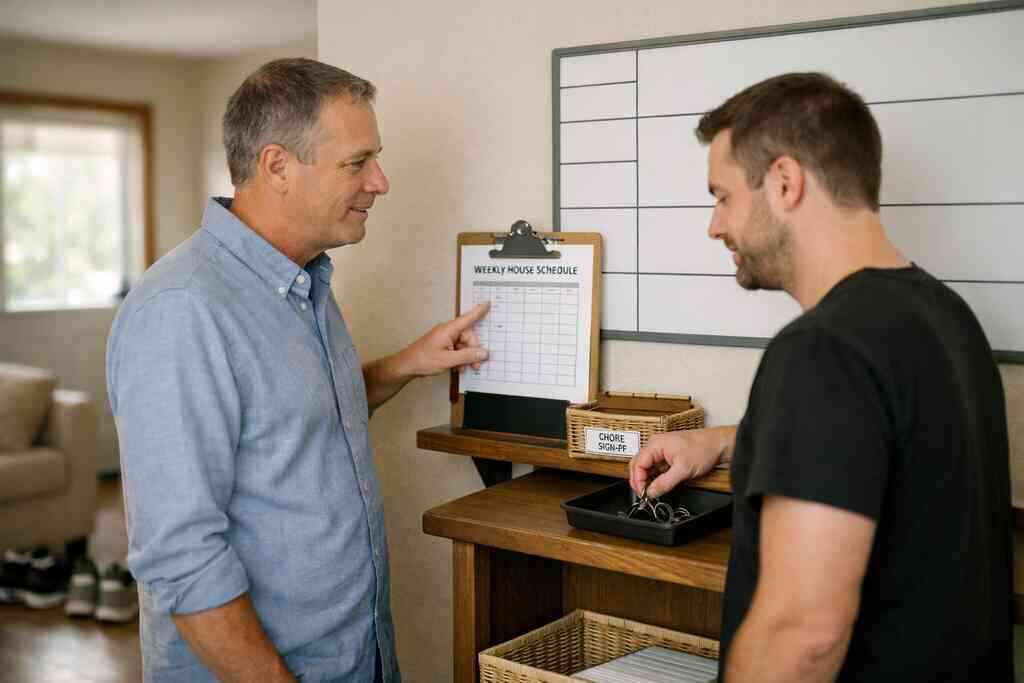
One mother we heard from described a house that claimed to support family involvement in recovery, but never scheduled a call with the clinical team. That left everyone guessing. Real programs make communication part of the system. They also understand that therapy access is not the same as therapy quality. You still need coordination, follow-through, and clear expectations.
How programs handle medication-assisted treatment including Suboxone, methadone, and Vivitrol
If you use medication-assisted treatment, ask early. MAT should never be treated like a side issue. The house should explain how it handles Suboxone, methadone, and Vivitrol support. It should cover storage, timing, transportation, and any pharmacy coordination. It should also clarify whether residents on MAT are welcomed without stigma. That question matters because MAT is often part of opioid addiction recovery. It can also support people with relapse vulnerability after fentanyl addiction or heroin addiction. A house that pressures you to stop prescribed medication is not being therapeutic. It is being careless. You deserve a program that respects clinical guidance and works with your care team. The hidden pressure points that decide whether a sober living program fits your life
A sober living house can look perfect on paper and still feel wrong for your life. Daily reality matters. You need safety, a sober community, a workable schedule, and support that matches your responsibilities. If the program ignores your actual life, it will be hard to stay engaged.
How to evaluate a safe living environment, sober community, and housing stability after treatment
Start with the environment itself. Is the home clean, calm, and maintained? Do residents seem engaged or disconnected? Is there a safe living environment with clear boundaries, or does it feel like a revolving door? Housing stability after treatment depends on more than a bed. It depends on whether the place supports recovery habits.
A sober community should feel steady, not performative. People should know one another. They should respect quiet hours. They should understand why structure matters. If possible, ask how long residents usually stay and how transitions work when someone is ready to move on. Stability is easier when the house does not feel temporary in every possible way.
What life skills development, employment support, education support, and financial responsibility in recovery should look like
The best programs help you rebuild ordinary life. That includes life skills development, employment support, education support, and financial responsibility in recovery. Ask whether the house helps residents build resumes, find classes, manage schedules, and budget money. Ask whether staff discuss transportation, banking, and meal planning. These are recovery skills, not side tasks.
Here is what almost no online guide mentions: financial chaos can trigger relapse. People who leave rehab with no plan for bills, work, or school can feel overwhelmed fast. A good house helps reduce that pressure. It does not promise a job. It helps you build a platform for one. That practical support can matter as much as any meeting.
When 12-step programs, SMART Recovery, holistic addiction treatment, or addiction treatment resources make sense for your next stage
Recovery support should match your values and needs. Some people thrive with 12-step programs. Others connect more with SMART Recovery. Some want holistic addiction treatment that includes mindfulness, exercise, or nutrition support. Others need a directory of addiction treatment resources because they are still deciding what comes next.
The best sober living programs do not force one recovery style. They help you build a plan that works. They may encourage meetings, therapy, meditation, or church-based support depending on your preferences. What matters is consistency. Recovery support should feel usable, not ideological. That is how people keep showing up.
How the program supports people with opioid addiction, alcohol use disorder, cocaine addiction, benzodiazepine addiction, fentanyl addiction, heroin addiction, or prescription drug addiction
Different substance histories can bring different risks. Someone recovering from alcohol use disorder may face strong social triggers. Someone with benzodiazepine addiction may need careful monitoring and support. Someone with fentanyl addiction or heroin addiction may need more intensive relapse prevention and medication coordination. Cocaine addiction and prescription drug addiction can also carry specific patterns of impulsivity and stress response.
A thoughtful house recognizes that. It does not flatten every resident into the same story. It asks about past use, current triggers, and support needs. It may coordinate with an addiction assessment or case manager when needed. If the program sounds generic, keep asking questions. Recovery support works best when it respects the shape of your actual struggle.
The decision that turns a good address into a real recovery plan
A sober living address is only the beginning. The real question is whether the house fits your next phase of care. You want a place that connects structure, treatment, insurance, and relapse prevention into one workable plan. That takes more than enthusiasm. It takes careful comparison.
How to compare sober living house options with aftercare planning instead of choosing the first opening you find
Do not choose the first opening just because it feels urgent. Compare at least a few options with aftercare planning in mind. Ask how each house supports outpatient program transition, therapy attendance, and recovery milestones. Ask how residents are discharged if relapse occurs. Ask how the house prepares people for moving into independent housing later.
A useful comparison can be simple:
What to compareStrong programWeak programStructureClear curfews, chores, testingVague expectationsRecovery supportMeetings, coaching, accountabilityMinimal follow-upClinical coordinationTherapy and MAT coordinationNo care coordinationTransition planningWritten aftercare steps”Figure it out later”If one house cannot explain its aftercare planning, that tells you enough. Good recovery housing should feel like a bridge, not a holding pattern.
What to ask about insurance for addiction treatment, paying for rehab, and in-network rehab before you commit
Money questions are uncomfortable, but they matter. Ask what is covered, what is not, and whether the program works with insurance for addiction treatment. Ask about paying for rehab, deposits, monthly fees, and any additional charges. If the house or its affiliated treatment providers are in-network rehab options, get that in writing when possible. Surprises can create stress you do not need.
If you are comparing finding sober living near me with insurance options, start early. Coverage for housing itself is different from coverage for clinical services. Some homes coordinate with treatment providers; some do not. The billing structure should be plain enough for a tired family to understand. If it is not, pause before you commit.
When the right next move is outpatient program transition, IOP, PHP transition, or added recovery support
Sometimes sober living is the right step. Sometimes it is not enough on its own. If you still need frequent therapy, medication monitoring, or daily accountability, an outpatient program transition, IOP, or PHP transition may be the better next move. A stable house can support that. A weak one can make it harder.
The goal is not to rush you out of care. The goal is to match support to need. If you recently completed drug rehabilitation and relapse prevention, your next step should still feel intentional. If you are unsure, ask for an addiction assessment or a review of ASAM criteria. The right pace protects progress.
How to leave with a clear plan for relapse prevention, accountability in recovery, and the next 90 days of sober lifestyle support
Before you sign, ask for a written plan. It should cover relapse prevention, accountability in recovery, meeting attendance, therapy access, and who you call if cravings spike. It should also outline the next 90 days of sober lifestyle expectations. That gives your recovery structure, not just hope.
If you want help sorting through sober living homes and addiction treatment support, use a resource that connects housing with the broader continuum of care. You do not have to figure this out alone, and you do not have to solve every piece today. Start with one careful call, ask the hard questions, and choose the home that supports your recovery rather than merely housing it.
Frequently Asked Questions
Question: In How to Choose a Structured Sober Living Program, what should I look for in a sober living house after residential treatment or an intensive outpatient program?
Answer: A strong structured sober living program should offer more than a bed and a recovery label. Look for clear house rules and expectations, curfews and daily structure, drug and alcohol testing, peer support in recovery, and a recovery-focused routine that fits your current level of care. If you are stepping down from inpatient rehab, PHP, IOP, or another outpatient program, the house should support that transition with accountability in recovery, relapse prevention, and practical aftercare planning.
At Addiction Treatment Services, we help people compare addiction treatment and recovery housing options across the U.S. so they can better understand what a real post-rehab support plan looks like. We focus on helping you find reputable addiction recovery resources, including sober living, transitional housing, and treatment programs that align with your needs. That can be especially important if you are rebuilding after medical detox, residential treatment, or an IOP step-down support plan.
Question: How can Addiction Treatment Services help me compare sober living, transitional housing, and recovery housing with the right level of care?
Answer: Addiction Treatment Services is designed to make how to choose a rehab and recovery support options easier to understand. We provide a directory-style resource that helps you compare sober living houses, transitional housing, and treatment options based on levels of care, including inpatient rehab, partial hospitalization program PHP, intensive outpatient program IOP, and outpatient program transition support.
When you are comparing recovery housing, the most important questions are whether the home supports substance use disorder recovery, whether it offers recovery coaching or case management, and whether it can coordinate with therapy access such as individual counseling, group therapy, family therapy, cognitive behavioral therapy, dialectical behavior therapy, or EMDR therapy. We help people look for programs that are attentive to dual diagnosis, co-occurring disorders, relapse warning signs, and the practical realities of housing stability after treatment.
Question: What questions should I ask a sober living house about MAT, Suboxone, methadone, or Vivitrol support?
Answer: If medication-assisted treatment MAT is part of your recovery plan, ask directly how the sober living house handles Suboxone, methadone, and Vivitrol support. A trustworthy program should be clear about medication storage, transportation, timing, and whether residents receiving MAT are welcomed without stigma. This is especially important for people in opioid addiction recovery, fentanyl addiction recovery, or heroin addiction recovery, where medication coordination can be part of relapse prevention and stability.
Addiction Treatment Services can help you identify treatment providers and recovery support resources that understand the role of MAT in addiction treatment. We also help people explore whether a home is prepared to work alongside an outpatient program, counseling, and aftercare planning instead of creating barriers. If you are unsure whether a program is appropriate, we recommend asking for an addiction assessment or clarification of ASAM criteria before making a decision.
Question: Does Addiction Treatment Services help people find sober living with therapy access and dual diagnosis support?
Answer: Yes. We help people explore addiction treatment resources that support the whole picture, not just sobriety on paper. If you are living with anxiety, depression, trauma, or other co-occurring disorders, dual diagnosis support and mental health support in sober living can be essential. A quality program should make room for therapy access, including individual counseling, group therapy, and family therapy, and it should coordinate thoughtfully with providers offering CBT, DBT, or EMDR therapy when appropriate.
Our role is to simplify the search for local addiction treatment centers and related recovery resources so you can make a more informed choice. That includes helping you compare homes that offer trauma-informed care, peer support in recovery, and a safe living environment that supports recovery milestones. We do not promise outcomes, but we do aim to help you find options that fit your needs and your level of care.
Question: How do I know if a structured sober living program is a good fit for my recovery after alcohol rehab, drug rehab, or medical detox?
Answer: A good fit depends on whether the home supports your recovery needs in real life. After alcohol rehab, drug rehab, or medical detox, many people need housing that reinforces relapse prevention, recovery support, and accountability in recovery while they rebuild structure. Look for a sober living house that can support life skills development, employment support, education support, and financial responsibility in recovery, since these are often central to staying grounded after treatment.
Addiction Treatment Services helps people evaluate addiction recovery resources with a focus on the full continuum of care, from detox centers and residential treatment to outpatient program transition and sober living. We understand that different people need different supports, whether that includes 12-step programs, SMART Recovery, holistic addiction treatment, or ongoing family involvement in recovery. If you are comparing insurance for addiction treatment, paying for rehab, or in-network rehab options, we can also help you better understand the landscape so you can make a calmer, more informed decision.